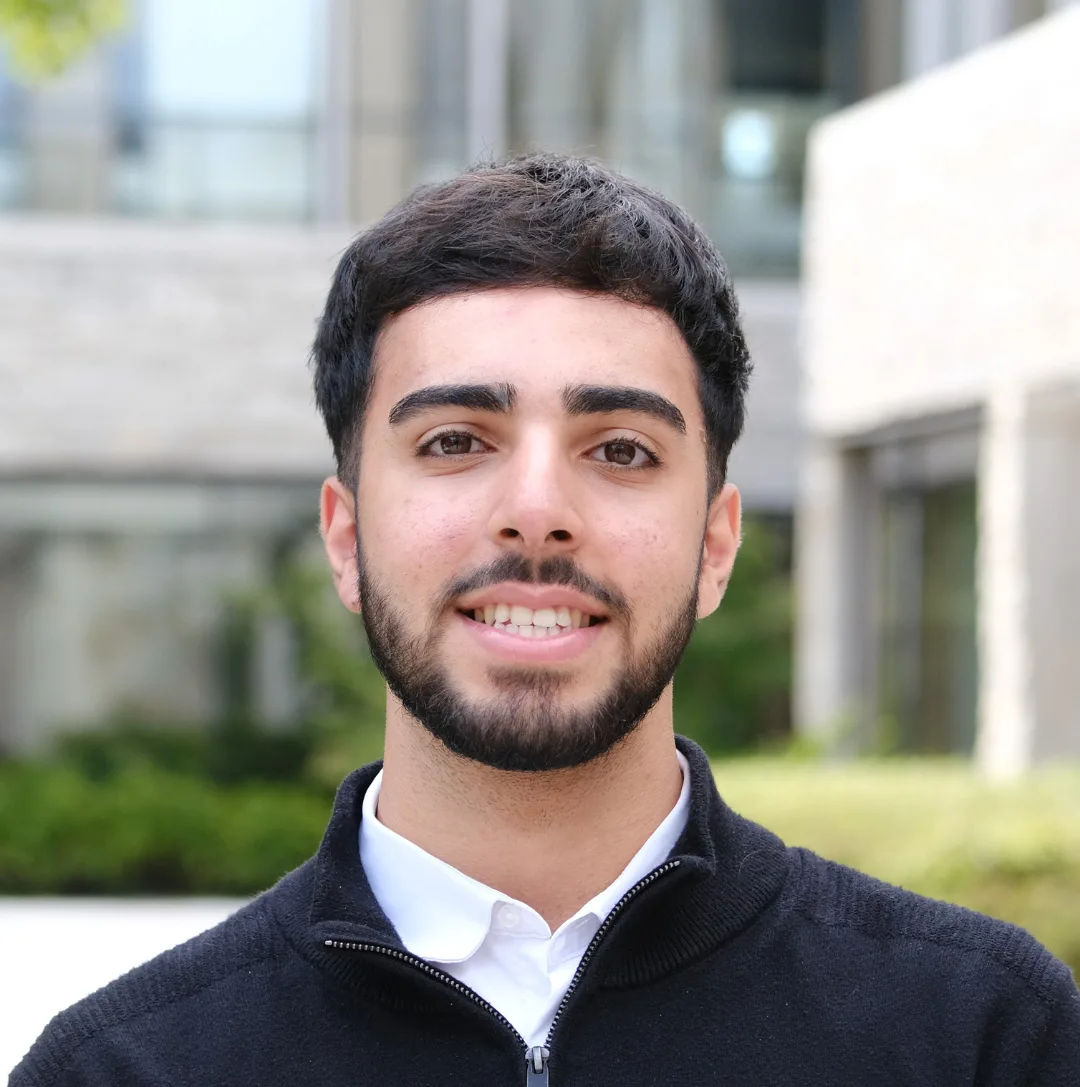

We’re excited to introduce Michael Morphew, one of the 2026 recipients of the Rainbow Youth Leadership Bursary, an award that recognizes young leaders for their outstanding efforts in promoting inclusivity and support for 2SLGBTQIA+ individuals.
How did you find out about the award, and what was your reaction to finding out you’d won it?
I initially found out about the award through members of the guidance department at my high school who encouraged students to apply for those applicable. When I found out I was a recipient of the Rainbow Leadership Award, I was completely stunned in the best way possible. I quickly sent a message to my family group chat as they constantly held me down while I anticipated the announcement of who the lucky winner was. I could barely contain my excitement to say the least!
Please tell us about some of the work you’ve done to make your community more inclusive and accepting of 2SLGBTQIA+ people.
Whenever I was presented an opportunity where I could shift the light onto a community who is unconsciously pushed to the periphery of society by most individuals, I took it. Whether it be a school presentation or through my Instagram page, @truecolorzyouth, I strive to give a voice to any member of the 2SLGBTQIA+ community who is stripped of theirs. I believe an important part about leadership and fostering an inclusive environment within your community is not about how loud you can force your ideologies onto others, but one’s ability to sit with and spread the pain and discomfort of others’ stories and experiences. For instance, I share stories of oppressed people who are part of the 2SLGBTQIA+ community (such as gay man Jim Egan and trans woman Lynn Conway) on my advocacy Instagram page – not to demonstrate the oppression we face as a community and how hard we have it – but to force those willing to listen to sit and observe the punishment individuals who seek self expression (like those part of the 2SLGBTQIA+ community) are faced with as a result. Consequently, my social media content and school-related advocacy have noticeably made my community not only more accepting of me, but also my fellow members of the 2SLGBTQIA+ community.
If you could change one thing about London and Middlesex County to make it a more inclusive and accepting community, what would it be?
As briefly touched on in my last statement, I would change the approach of plastering “ACCEPT THE 2SLGBTQIA+ COMMUNITY” around London and Middlesex County exclusively during months like Pride Month, for example. I say this because no one person is identical and everyone comes from different walks of life, cultures, customs, etc., and unfortunately it is unrealistic to expect everyone to be receptive to my community and what we stand for. However, I believe simply by incorporating us into the conversation more often, even if you’re unfamiliar with the idea of the 2SLGBTQIA+ community, does far more than the performative activism we see frequently during times like the month of June. Ultimately, I am trying to invite everyone reading to go talk to that gay neighbour, reconnect with that trans person from high school or even book an appointment with that pansexual hairdresser because you might just like us more than you thought you would! My community is so beautiful and has so much rich culture to offer society in terms of love, spirit and self-expression.
In your application, you told us you’re a very resilient person, referring to your ability to balance your leadership role with maintaining good grades. How important a quality is resilience for young people and for members of 2SLGBTQIA+ communities?
For young people as a whole, it is greatly important to possess resilience – especially in today’s world of apathy being the next big thing. Being able to remain emotionally and mentally unwavering in the face of challenge is a gift from God anyone should be happy to have, but especially members of the 2SLGBTQIA+ community. I hate to say it, but if you, a friend or a family member is a part of my community – odds are you or they have faced some kind of conflict surrounding it in their or your life one way or another. As a proud gay man living in a society that doesn’t always celebrate feminine men, I had no choice but to adopt resiliency. However, I don’t see that as a bad thing necessarily, as without that thick skin, I would not be writing these answers today – I would have never mustered up the courage within myself to take responsibility for my own life and break free from the grasp others’ perceptions had on me. Hence, working towards having resilience as members of the 2SLGBTQIA+ community is a necessity that we should support one another in adopting.
This award recognizes your leadership – are there any leaders you look up to, and what qualities do they have that influence your leadership style?
I get it all from my mom and my dad. As cliché as that is to say because most people give thanks to their parents for awards, they are the two most driven, bold and outspoken people I’ve had the pleasure to be the son of. They both have mutually faced plenty of hardship in their life that could have made them bitter and spiteful, yet they continuously advocated not only for me, but for strangers as well. For example, my mom was a special education teacher for a point in her career, and she constantly would return home in tears because of how strongly she felt for the children she worked with. Despite all she had going on herself to dwell on, she was the voice for those children, and I think that is beautiful. She showed me through those moments that leadership manifests in many different ways, and not in the traditional, “I am the boss,” mindset we often see depicted in popular culture and social media. Ultimately, they demonstrated to me that you don’t need to have the most resources or even experience to be a leader – all you need is the heart and drive to do so.
What would your advice be to other young people who are thinking about getting involved in advocacy or leadership surrounding any issues that they’re passionate about?
My advice to young people thinking about involving themselves within the advocacy scene would be to stop waiting for the right moment or person to show you how. No one is given a handbook, unfortunately, in this game we call life so you might as well write your own rules. If you feel passionate about Indigenous peoples and the struggles they face within our community for example, but notice that there are no advocacy groups pertaining to that issue -start one. It may be messy. It may be chaotic. It might even burn you out. But the best thing to do is persevere and just do it!