

Community Vitality 2026: $1.45 Million Granted to Six Transformative Projects in London and Middlesex
London Community Foundation’s Community Vitality grant program – one of the Foundation’s largest funding streams – has awarded over $1.45 million to support six projects in London and Middlesex County run by local charities.
The Community Vitality grant program provides vital support to charities tackling critical issues in our communities. The grant recipients this year are doing this through creating farmer-led solutions to address environmental concerns, increasing the capacity of crucial local mental health services, enhancing social connection programming for 2SLGBTQIA+ communities, and improving access to free food and essential goods, low-cost veterinary care, and tenant rights information.
The 2026 Grantees
- ALUS Middlesex: Enhancing Climate Resilience in Middlesex County – $345,000 over three years
- Daya Counselling Centre: Trauma Recovery Initiative – $180,000 over three years
- Humane Society London & Middlesex: Low-Cost Veterinary Care for Low-Income Community Members – $275,000 over three years
- Lionhearts London: Food and Essential Goods Recovery Program – $262,500 over one year
- London ACORN: Building Capacity in Renter Communities – $150,000 over three years
- Queer Intersections: 2SLGBTQlA+ Community Hub Program – $242,163 over three years

Learn more about the grantees and their projects
Grant: $345,000 over three years
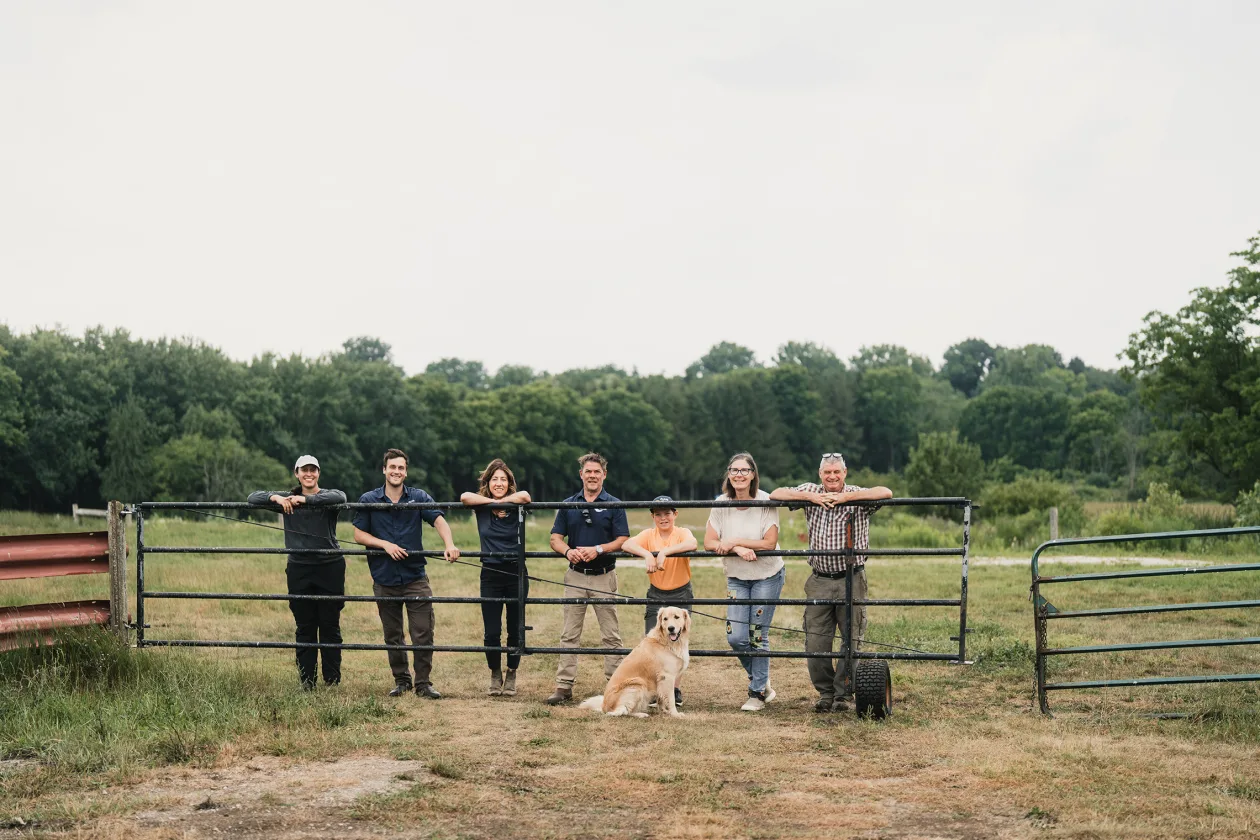
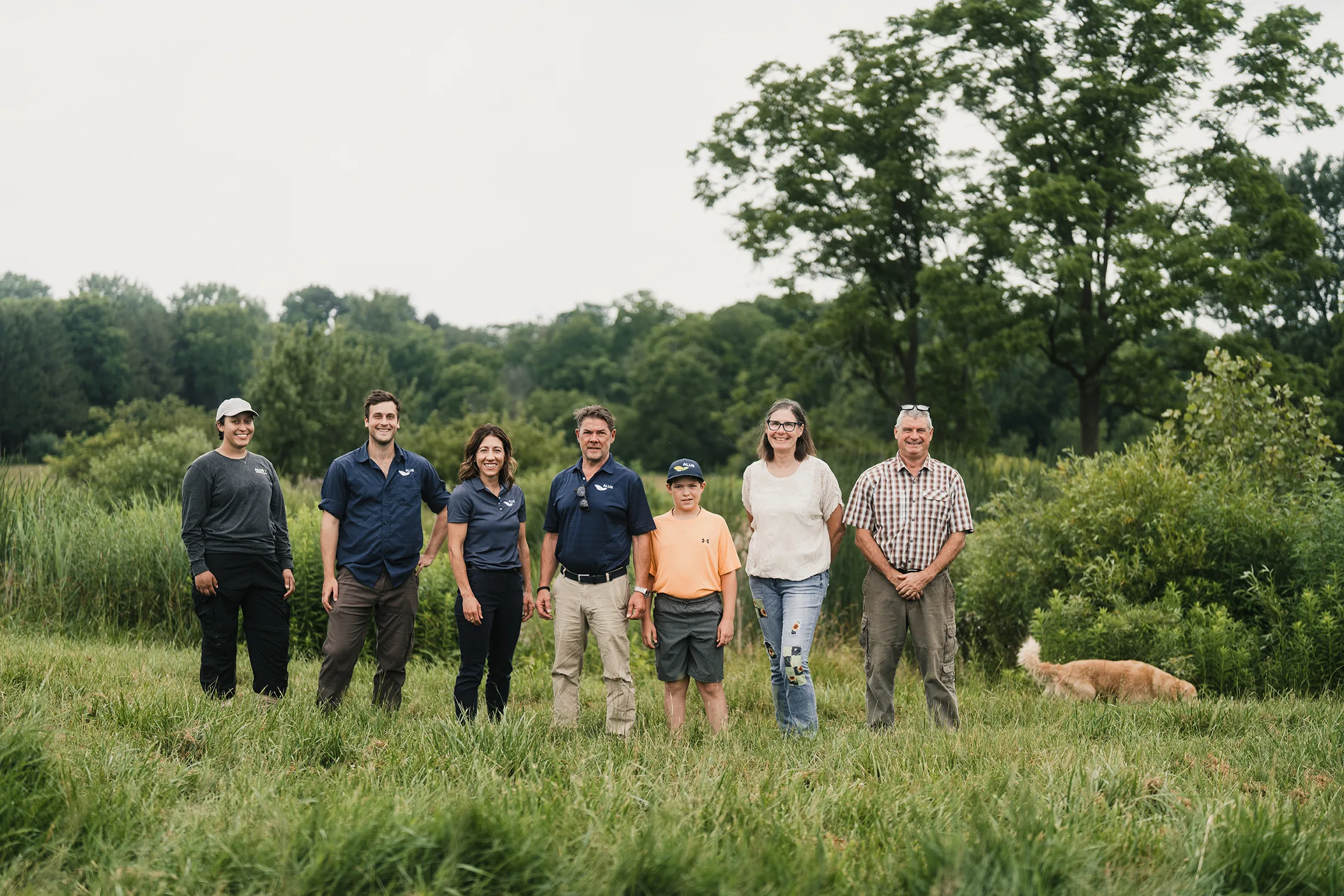
ALUS Middlesex is partnering with farmers on environmental projects to benefit communities across Middlesex County.
ALUS Middlesex partners with farmers to deliver community-led, environmentally beneficial projects on agricultural land.
By designing and maintaining projects that improve ecosystems while keeping farms productive, farmers become essential partners in building resilient landscapes, as ALUS CEO Jordan Sinclair explains: “Participating farmers establish and steward wetlands, native grasslands, and other nature-based solutions on their land, creating benefits that extend well beyond individual farms.”
Benefits of these environmental projects to the wider community include:
- Improved water quality
- Increased watershed function
- Flood and drought mitigation
- Cleaner air
ALUS started working in Middlesex County in 2017 and has established a pipeline of “shovel-ready” projects that cover 128 acres. The $345,000 Community Vitality grant will support the stewardship of 90 acres of nature-based solutions over three years. Each acre contributes to a broader network of ecosystem services, which benefits everyone.
The funds will support program delivery in building nature-based solutions on farmland, monitoring and reporting of program outcomes, and community outreach. The funds will also provide project design support and mentorship opportunities for the participating farmers – who ALUS recognize as leaders in addressing environmental challenges.
While the Foundation’s grant is expected to cover 90 acres, ALUS anticipates that by the end of 2032, close to 500 acres of land will be awaiting funding for environmental projects, meaning this program has plenty of room to grow its impact.
“This project is scalable, with each additional dollar invested directly expanding the number of acres placed under stewardship, unlocking proportional increases in environmental outcomes and community impact,” says Jordan.
This grant reflects London Community Foundation’s commitment to local climate action to strengthen ecosystems and build a more resilient future in Middlesex County.
Grant: $180,000 over three years
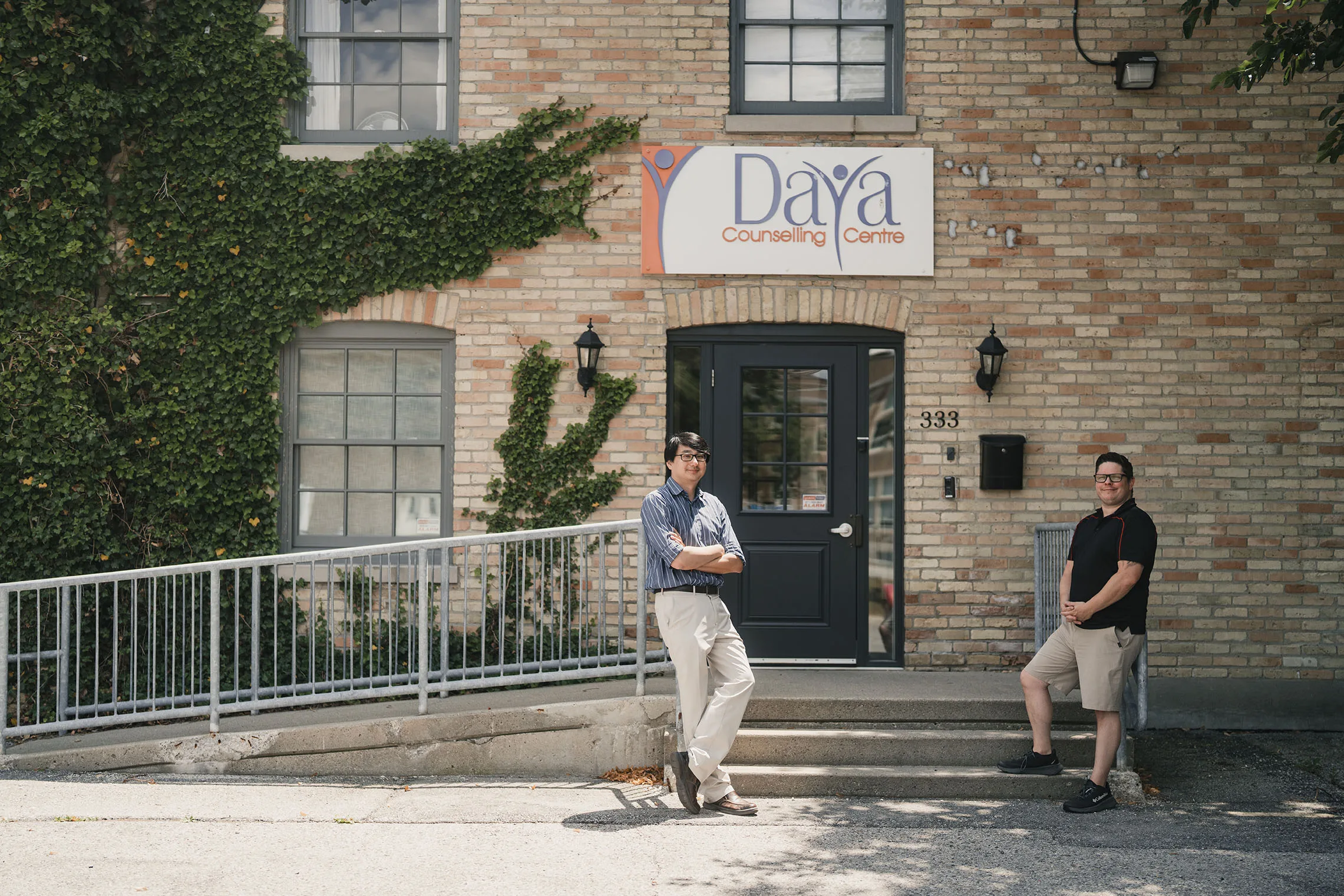
Daya Counselling Centre is launching intensive trauma stabilization groups for individuals facing socio-economic barriers to care.
“London’s mental health care system is built to help as many people as possible with limited resources — which makes it especially effective at acute, short-term crisis response. But trauma recovery rarely fits this model. In trauma therapy, slow is smooth, smooth is fast. One of the main reasons people can get stuck in the system is that they are often not ready to tolerate the deeper experiential work that recovery-oriented trauma therapy requires because our current system often does not offer people the necessary space and time,” says DaQing Wang, Executive Director at Daya Counselling Centre.
Psychotherapy in London is largely privatized, often resulting in a cycle of repeated crises for those facing socio-economic barriers, as access to longer-term services is not available. Through the Trauma Recovery Initiative, Daya will provide equitable access to trauma-focused care through intensive trauma stabilization groups for patients within London’s mental healthcare system. The program aims to prepare adults with complex trauma histories to safely engage in long-term therapy. Groups of eight participants will meet twice weekly for eight weeks, giving them the time and space needed to stabilize and become ready for long-term psychotherapy.
By providing a “next step” in service from crisis care by meeting people where they are at, some of the expected outcomes of this program include a reduced reliance on crisis and emergency services by the patients, stronger referral networks among community agencies, along with creating a community among the patients that can lead to reduced feelings of stigma or isolation they may feel relating to their mental health challenges.
“Group models foster peer support and connection, reducing the isolation often associated with trauma and poverty. Successful outcomes from the group program may lead to shared financial responsibility among community partners to maintain these groups long-term,” says DaQing.
This $180,000 Community Vitality grant will support Daya in piloting the program, enabling it to offer at least six groups annually over three years.
“To our knowledge, no current programs in the community have ever offered this level of intensive support,” says DaQing. “We want to use the groups to show that when people are given the time, space, and support to stabilize, not only will the individual trauma therapy be more effective, but people will develop the resilience and capacity to escape the cycle of trauma and crisis and no longer need to depend on the system.”
Through this grant to Daya Counselling Centre, London Community Foundation is helping increase equitable access to mental health care within the local healthcare system, reducing pressure on crisis services, and supporting an approach aiming to create systemic change.
Grant: $275,000 over three years
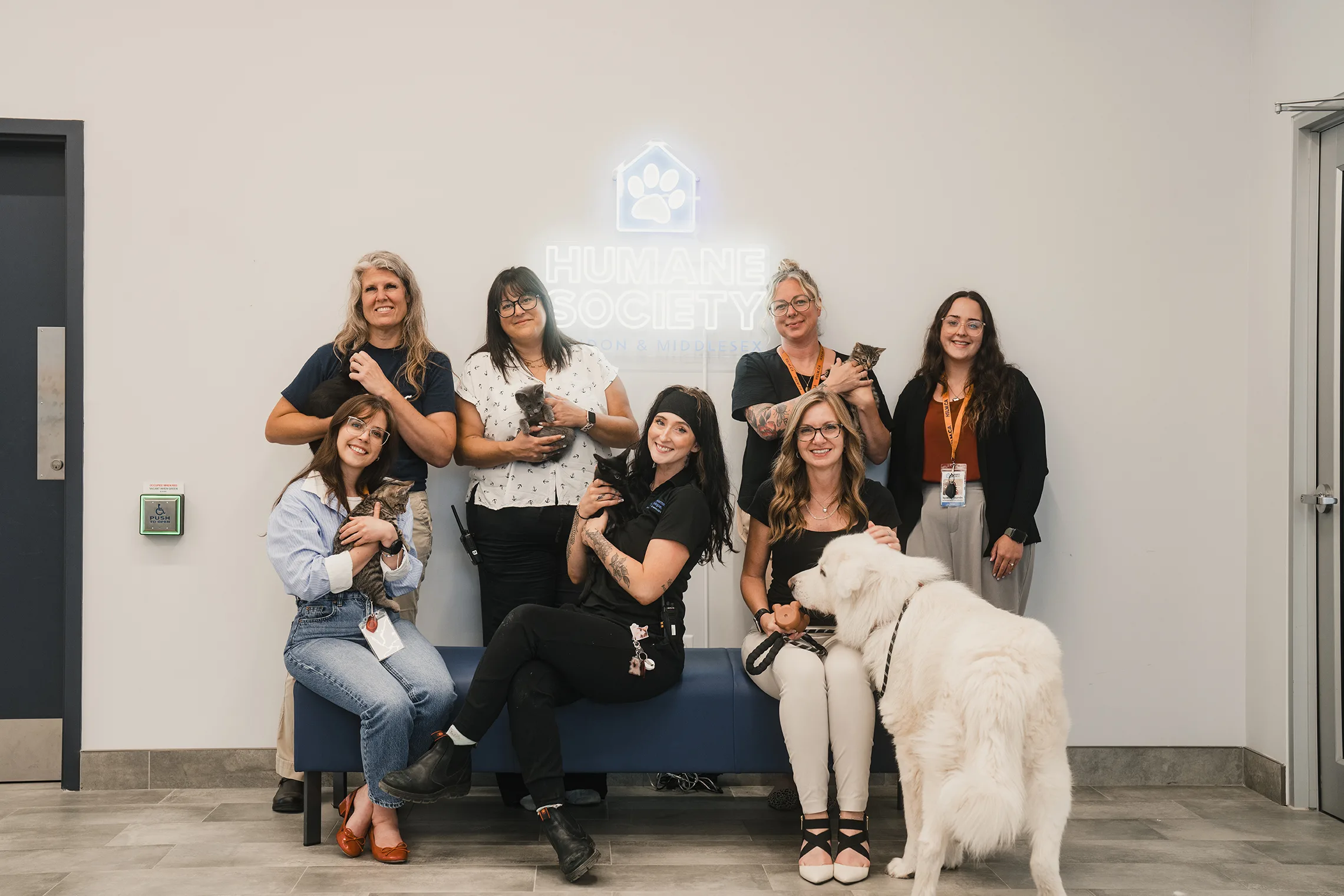
Humane Society of London & Middlesex is opening its in-house veterinary clinic to low-income community members.
Around 2,500 animals a year are given shelter by the Humane Society London & Middlesex (HSLM) as they await permanent homes. These numbers are growing as more people in our communities experience financial hardship – a leading cause of pet surrenders. To combat this, HSLM is taking a preventative approach by expanding their in-house veterinary clinic services to low-income community members.
Working directly with community partners such as Meals on Wheels, for whom 60% of their clients live below the poverty line, Indwell, who operate pet-friendly, low-income and supportive housing, and trusted partners in London’s neighbouring First Nations, the Humane Society will be sure to reach the community members most in need of this new service.
“By partnering with these organizations to provide low-cost or no-cost services, we can improve the quality of life of animals while reducing financial pressures for people in our community and helping them preserve limited resources for housing, personal wellbeing, and other essential needs,” says HSLM Executive Director Shannon LaHay.
The goal is to make the clinic available one day a week, 40 weeks a year, with HSLM hoping to book up to eight appointments a day depending on the needs of each animal. Services will focus on preventative vaccinations and treatments, spays/neuters, and microchipping. London Community Foundation’s $275,000, three-year grant will support roughly half of the expected costs – with HSLM looking to use the success stories to help fundraise the remaining costs.
While running the project, HSLM plans to gather information about the local pet population and aims to ensure the program is replicable across other organizations and communities. “Our goal is to improve the health and quality of life of pets in our community, while reducing the number of unplanned kittens and puppies being born,” says Shannon.
Participants whose pets receive care through HSLM’s low- or no-cost veterinary services not only benefit from the immediate reduction in the cost, but also from the emotional relief of knowing the care is accessible should it be needed.
The program’s preventative approach supports the members of our communities most in need and reflects London Community Foundation’s desire to support systemic change in our communities as well as our commitment to long-term, sustainable philanthropy.
Grant: $262,500 over one year
Lionhearts is helping reshape how London responds to poverty by turning surplus into support.
Lionhearts is working to tackle hunger through its Food and Essential Goods Recovery Program, where surplus food and essential items that would otherwise go to waste are recovered and redistributed to their growing network of frontline agencies serving people experiencing poverty or homelessness.
Since launching in London in August 2024, Lionhearts has built a recovery and redistribution network by partnering with businesses, venues, and more than 40 food banks, shelters, and other community organizations. As of early 2026, the program had already redistributed over $1 million worth of food and goods while diverting nearly 80,000 kilograms of usable products from landfill.
“Families are choosing between rent and groceries; shelters are operating beyond capacity, and service organizations face rising costs while donations decline,” says Travis Blackmore, Founder & CEO of Lionhearts. “Access to food, hygiene products, household essentials, and infant supplies is now one of the most significant gaps affecting dignity, health, and stability for people living in poverty.”
The breadth of items Lionhearts rescues and redistributes makes their model unique. Among the many items currently in their warehouses are:
- Party supplies, used by shelters to throw birthday parties for their residents.
- Toys, to be distributed to local community resource centres ahead of Christmas.
- Office stationery, which allows charities to save dollars on operating costs and instead put them into front- line work.
A $262,500 Community Vitality grant from London Community Foundation will help Lionhearts grow their impact by scaling their operations in London. Funding will support operational costs, including staffing, transportation, and warehouse equipment – essential expenses for the London Food and Essential Goods Recovery project to maximize its impact by running efficiently.
With this investment, Lionhearts plans to significantly increase access to essential goods, strengthen the capacity of partner agencies, and build a more connected volunteer network.
The impact of this work is more than stopping food and other goods from going to waste; it’s about dignity and connection, as Travis explains: “This is the transformative work of Lionhearts. We connect surplus with need, but more importantly, we remind people that they matter. No one should be left behind when there’s enough to go around.”
London Community Foundation’s support for Lionhearts will strengthen their city-wide network of care — ensuring that what might otherwise go to waste helps some of the most vulnerable people in our communities.
Grant: $150,000 over three years
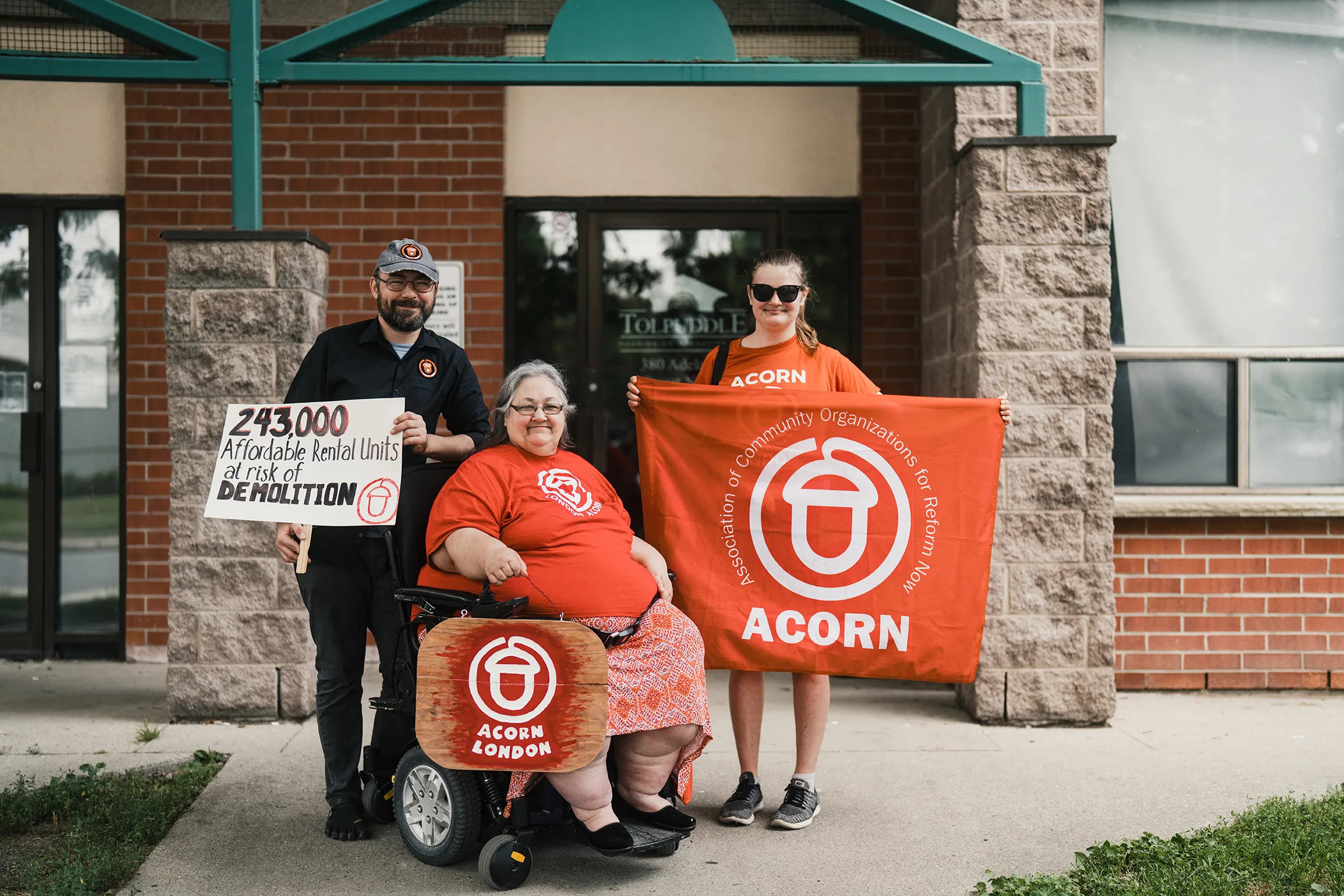
ACORN London is equipping low-income renters with the skills and knowledge needed to create more equitable renter communities.
ACORN London empowers low-income renters by building their capacities as individuals to respond to their immediate housing needs and defend against bad-faith eviction. They work to build a community of tenants who can collectively make systemic change by influencing municipal policy.
“Low-income tenants are more likely to live in older, poorly maintained apartment buildings because these units are more affordable. Substandard housing conditions (ex. cockroaches, bedbugs, mould) undermine residents’ health and safety, while energy-inefficient buildings (ex. water leaks, poor heating/cooling) contribute disproportionately to local greenhouse gas emissions,” says Jordan Smith, Chair of London ACORN’s East of Adelaide Chapter.
The $150,000 Community Vitality grant will allow ACORN London, in partnership with ACORN Institute Canada, to: establish a tenant hotline to connect tenants to community resources and legal information; run a series of workshops filling in gaps in tenant education; track and report on housing issues at City Hall with input from tenants; and work with tenants to develop municipal policy recommendations. Through this work, ACORN London will increase tenants’ knowledge, leadership abilities, and civic engagement, resulting in more resilient renter communities in London.
Funds will be used to pay a portion of staff salaries for three years. Expanding staff capacity will allow ACORN London to significantly increase its impact, with expected benefits including:
- Increased access to resources that prevent homelessness and improve the quality of housing for low-income tenants.
- Increased participation by low-income tenants in municipal decision-making opportunities such as public consultations and town halls.
- A pipeline of trained tenant leaders who can represent their communities.
- Improved evidence-based understanding by London’s local decision-makers of tenants’ lived experiences and priorities to inform municipal policy.
Having built a network of 5,000 tenant members and relationships with organizations such as Neighbourhood Legal Services, LIFE*SPIN and, London lnterCommunity Health Centre, ACORN London has a track record of impacting change in London:
“On September 24th, 2024, the City of London introduced its ‘Rental Unit Repair Licence’, becoming the 2nd city in Ontario to pass an anti-renoviction bylaw as a direct result of ACORN London’s community development work,” says Jordan.
Supporting ACORN London’s work through this Community Vitality grant underlines London Community Foundation’s beliefs in a housing-first approach to health care, that everyone has the right to suitable housing, and that communities hold the power to create systemic change.
Grant: $242,163 over three years
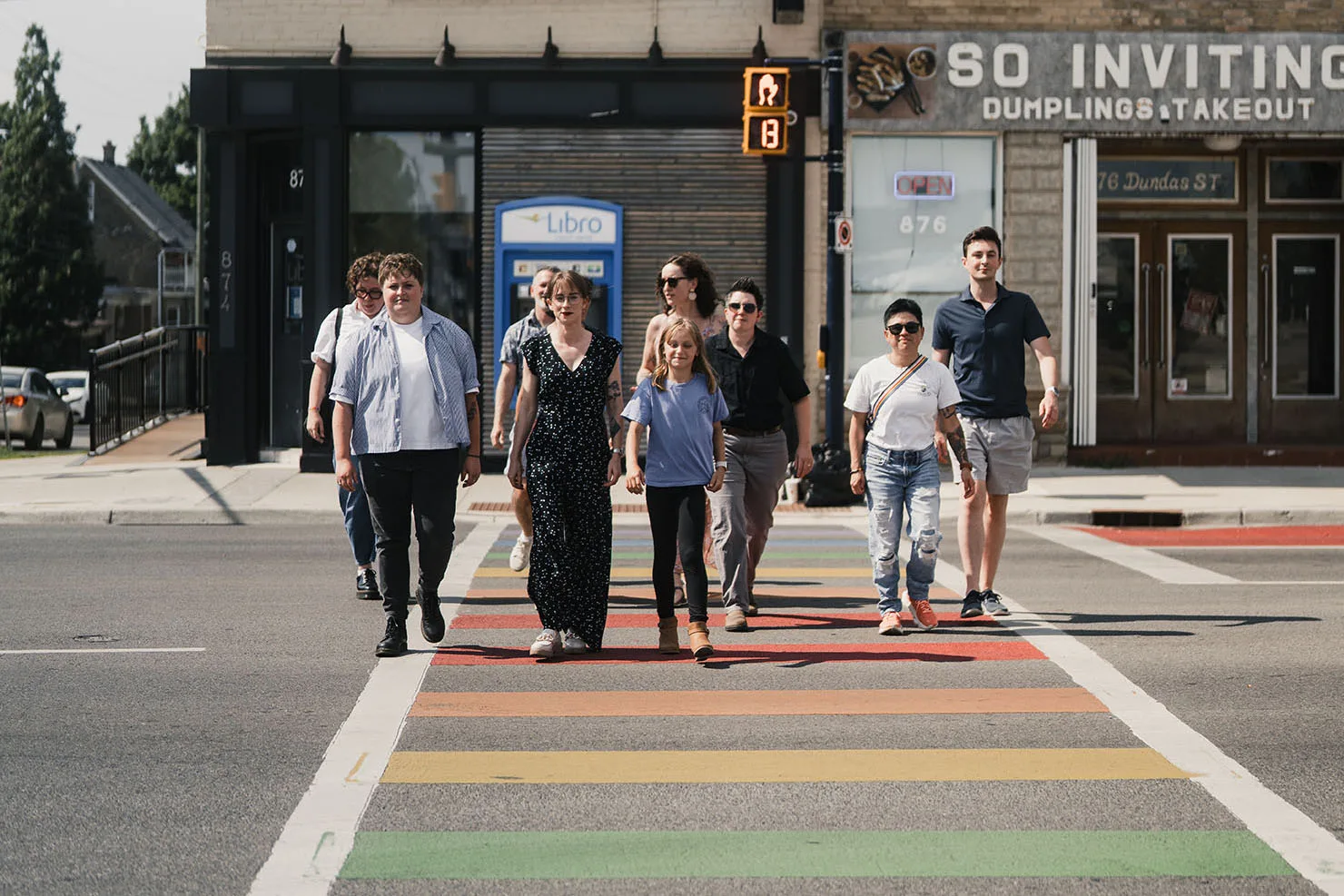
Queer Intersections is increasing services to over 2,000 2SLGBTQIA+ individuals in the London-Middlesex region.
The 2SLGBTQIA+ Community Hub is London’s only dedicated year-round, sober, and intergenerational space led by and for 2SLGBTQIA+ community members. The Hub, operated by Queer Intersections (QX) – a volunteer-run charity – provides low-barrier mental health programming, a gender-affirming clothing closet, a food pantry, and drop-in space.
Having dedicated space where people can feel safe has become increasingly important in recent years, as hate crime charges in London have tripled since 2019. 25% of these offences have targeted 2SLGBTQIA+ people.
“We partner with organizations including London Public Library, Childreach, Regional HIV/AIDS Connection, and 2SLGBTQIA+-affirming counselling providers to strengthen access to services year-round,” says Vice President Mackenzie Van Hoof. “Connection and belonging are key social determinants of health linked to reduced isolation and improved mental health.”
The $242,163 Community Vitality grant will support a staff position at the Hub – QX’s first paid member of staff – which will allow access to the Hub to increase its operating hours from its current 2-10 hours per week to over 30, providing more opportunities for community members to access supports, and giving Queer Intersections the opportunity to strengthen their relations with local partners. With this additional capacity, QX will look to tailor support for intersectional community members such as 2SLGBTQIA+ individuals from Black or Indigenous backgrounds or from faith communities.
As an established and trusted presence within the 2SLGBTQIA+ community, Queer Intersections received over 50 requests for outreach and partnership from social service organizations in the past 18 months, which speaks to the need for extra capacity at their Community Hub. Many of these requests – such as contributing to Changing Ways’ 2SLGBTQIA+ Advisory Council and the City of London’s Safe Cities Advisory Committee – give QX the ability to influence systemic change and ensure that 2SLGBTQIA+ voices are heard by local decision-makers.
“Without dedicated staff capacity, QX cannot fully meet this demand or represent community voices in vital systems-change conversations,” says Mackenzie. In supporting Queer Intersections’ 2SLGBTQIA+ Community Hub, London Community Foundation is increasing immediate access to services for a historically underserved population, while building the capacity of a trusted grassroots organization that has the relationships, expertise, and lived experiences to affect positive, systemic change in our region.
The annual Community Vitality grants are made possible by Community Fund fundholders, as well as donations from families, individuals, and businesses to London Community Foundation’s Community Fund. This fund pools contributions to enable collective support for organizations that are addressing the issue areas in the Foundation’s flagship Vital Signs report: climate & environment, gender equality, good health & wellbeing (including mental health and addictions, and the arts), housing, reduced inequalities, and zero hunger.
Donors and fundholders trust the volunteers from the London and Middlesex region who make up the Foundation’s Grants Committee to review all Community Vitality applications and select the recipients for review and approval by the London Community Foundation Board of Directors.
Recent Community Vitality Successes
Last updated September 15, 2026